

Navigating Geopolitical Shifts: Why Dubai Remains a Stable Logistics Hub in Uncertain Times
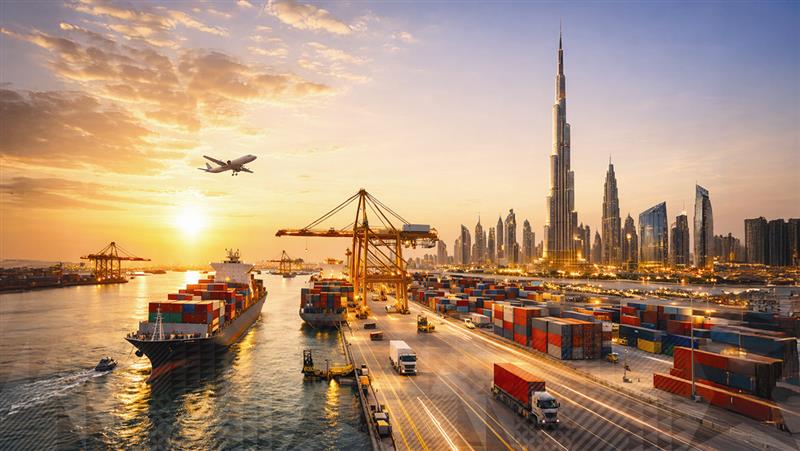
In an era marked by heightened geopolitical tensions, global logistics networks are being tested like never before. Disruptions to major maritime corridors and airspace closures have introduced challenges for global supply chains, prompting businesses to reassess routing, capacity, and risk mitigation strategies. Despite these pressures, Dubai has emerged as a resilient anchor in the global logistics landscape, maintaining its status as a preferred hub for freight movement and supply chain continuity.
The Impact of Geopolitical Tensions on Global Trade
Recent escalations in conflict across the Middle East have had tangible effects on global logistics. Airspace closures, including over parts of the Gulf region, have disrupted freight capacity, leading to increased air freight rates and limited cargo flight operations. According to industry updates, the ongoing conflict has driven air freight rates up as much as 70% on certain routes due to airspace restrictions and rising jet fuel costs.
Similarly, maritime trade routes have been affected. Emergency rerouting and surcharges have become common as carriers avoid risky areas, and insurers have paused or limited war-risk coverage for vessels transiting vulnerable corridors such as the Strait of Hormuz. These shifts have driven carriers to consider alternative routes, including longer passages around Africa, adding days if not weeks to shipping timelines.
These developments have put pressure on freight operators worldwide, including those that traditionally rely on cargo and freight services through Gulf ports. However, Dubai’s diversified logistics infrastructure has helped cushion these impacts and ensure the continued flow of goods.
Strategic Geography: Dubai, the Gateway Between Continents
Dubai’s geographic position remains a cornerstone of its logistics strength. Located between Asia, Europe, and Africa, the city sits at one of the busiest global crossroads for trade. This location allows cargo to be efficiently routed across major markets and enables freight forwarders to offer flexible routing options that adapt to shifting conditions.
The emirate hosts world‑class infrastructure that supports these strategic advantages. Jebel Ali Port, the Middle East’s largest container hub, handles millions of TEUs annually and serves as a critical transit point for ocean freight. Free zones like Jebel Ali Free Zone (JAFZA) attract thousands of companies by offering streamlined customs processes, tax incentives, and proximity to key port and air facilities, further strengthening the integrated supply chain ecosystem.
Moreover, Dubai’s airports continue to play a central role in global air cargo movement. Even amid disruptions, logistics data shows significant freight volumes handled through the UAE’s air cargo network, underscoring the hub’s importance for time‑sensitive and high‑value shipments.
Together, these assets create a resilient logistics corridor that links sea, air, and land transport — a critical advantage for companies seeking reliable cargo service routes during times of uncertainty.
How Dubai’s Supply Chain Infrastructure Adapts to Disruptions
Dubai’s ability to absorb shocks stems from its diversified logistics network and ongoing investments in infrastructure. When traditional corridors face congestion or closures, the city’s extensive multimodal options allow freight to be rerouted with minimal disruption. For example:
- Alternative seaports and rail connections — When certain routes are compromised, secondary sea gateways like Khorfakkan, Fujairah, and Salalah become important complementary nodes, and road or rail links offer continuity across GCC markets.
- Air cargo flexibility — Even when airspace restrictions impact capacity, Dubai’s cargo operators can deploy freighter fleets and coordinate with partner hubs to keep essential goods moving.
- Multimodal options — Cross‑border trucking and intermodal freight services provide alternatives when maritime or air routes are limited, ensuring goods can still transit to key markets.
These capabilities help maintain operational continuity for companies using Dubai as part of their regional or global supply networks, even during periods when other corridors are under strain.
The Resilience of Dubai’s Logistics Sector
Despite recent disruptions, Dubai’s logistics sector continues to demonstrate resilience, a reflection of long‑term planning, strategic investment, and privatization of logistics assets. The UAE logistics market is projected to grow steadily, supported by expansion in freight handling, warehousing, and value‑added services, with significant public and private capital flowing into infrastructure and technology.
Senior industry leaders have also highlighted that, even amid regional uncertainty, many supply chain operations continue without material interruption and businesses maintain confidence in Dubai’s role as a stable trade hub.
For freight forwarders and global shippers, this stability enables continued investment in long‑term operations, confident that Dubai’s interconnected logistics network, spanning ports, airports, free zones, and land corridors, will support consistent cargo flows.
In conclusion, global geopolitical tensions have undeniably disrupted certain trade corridors and introduced new layers of complexity into international logistics. Yet Dubai’s strategic location, robust infrastructure, and diversified transport networks, coupled with a strong supply chain ecosystem, have helped it absorb shocks and continue to serve global trade with reliable cargo service offerings.
For businesses and logistics partners, Dubai’s stability is more than a geographic convenience; it is a strategic advantage that supports continuity, flexibility, and growth even in uncertain times. As global trade continues to evolve, Dubai’s role as a resilient logistics hub is likely to strengthen, making it an indispensable node in international supply chains for years to come.


